- Scently Speaking
- Posts
- 15 Game Changer Fragrances
15 Game Changer Fragrances

Sebastian Graf
March 12, 2026
Hello, Fragrant Friend 👋,
It is probably the question I get asked most about New Niche. How do you make sure that fragrances released under New Niche share something recognisable. A common thread? A signature?
And honestly, I am still thinking about that. Is this something I have not communicated clearly yet. Or is it simply the market expecting a type of brand coherence that belongs to the old perfume model. It feels a bit like the classic innovator’s dilemma. Am I being naïve, or is the market still thinking in established patterns?
If you want to follow these small frictions and discoveries more closely, I write about them weekly at scentlyspeakinglab.com.
Now, onto this issue
🗓️ Contents of this Issue
Note Worthy: Future50 Forecast, Digital Fragrance Currents, Game Changers
Niche Newcomers: Vanilla CO₂ & Oud, Gauguin, Lifted
Quiz: Which flower shows you are taken …. or not?
Scent MythBusters: Do only the big aroma houses feed the scent world?
Note-Worthy 🔎🌸
#FUTURE50FORECAST: BeautyMatter’s annual Future50 list returns to New York City on 18–19 March 2026. It curates fifty emerging brands that investors have been whispering about for months. Among them are BORNTOSTANDOUT and Nishane—houses whose daring compositions could soon be owned by private equity. The list is a reminder that money moves faster than creativity: as soon as a brand resonates with an audience, acquisition talk begins. For those who cherish perfume as culture, watching the Future50 feels like observing a cohort of promising saplings in a forest scheduled for logging. The event invites us to consider which of these saplings might remain wild, and which will be cut down for profit.
#FRAGRANCECURRENTS: According to Spate’s popularity index, fragrance remains the most active beauty topic online. Digital chatter about perfume rose 18.4 percent in 2025 and is expected to grow another 31 percent next year. Interest in hair perfumes and luxury extraits has more than doubled, while masculine, white floral and woody accords are rising fastest. Vanilla continues to dominate social media, with TikTok driving nearly 70 percent of related searches. Meanwhile marshmallow, pistachio and matcha have entered the fragrance conversation, showing how quickly scent trends now travel online.
#GAMECHANGERSCENTS: Michel Gutsatz, MD of Le Jardin Retrouvé, recently argued that the €4.8 billion niche perfume market rests on two very different stories. From 1975 to 2000, perfumer-founded houses such as L’Artisan Parfumeur and Serge Lutens created true game changers like Mûre et Musc. After 2000, entrepreneur-led brands such as Creed and Byredo proved that niche could scale commercially, though few of their hits were genuinely innovative. As investors increasingly acquire niche brands, Gutsatz reminds us that the real breakthroughs in perfumery usually start at the margins, not with incumbents.
Niche Newcomers 🎨 🌟
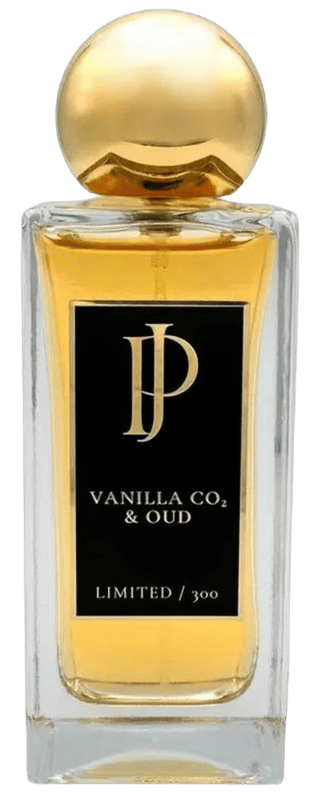 | Vanilla CO₂ & Oud — Dark Vanilla ResplendentDark without being brooding, Vanilla CO₂ & Oud opens with the translucent spice of elemi and pink pepper cut with rum CO₂, suggesting warmth without sugar. The heart moves into a dense chocolate accord—cocoa absolute, cocoa butter and benzoin—tempered by opoponax and a surprisingly airy vanilla CO₂. In the dry‑down, a buttery vanilla absolute drapes itself over Cambodian oud, sandalwood and tonka bean, then settles into amber, labdanum and musk. The composition is limited to 300 bottles and feels contemplative rather than loud. It invites slow wear, like sipping a black coffee by candlelight. Perfumer: Joschka Klee |
 | Gauguin — Tropical ReverieFrancesca Bianchi’s limited edition is a dream of Polynesia drawn through a painterly lens. Gauguin opens with a burst of bergamot and aldehydes, evoking bright light on water. Very quickly the scent turns milky: a Monoï accord built from tiare soaked in coconut oil is supported by ylang‑ylang, tuberose and geranium. At the base, amber, vanilla and vetiver create a velvet softness that feels both carnal and ceremonial. Bianchi, an art historian by training, says she wanted to translate Gauguin’s decadent colours into scent; wearing it feels like slipping into a painting. Perfumer: Francesca Bianchi |
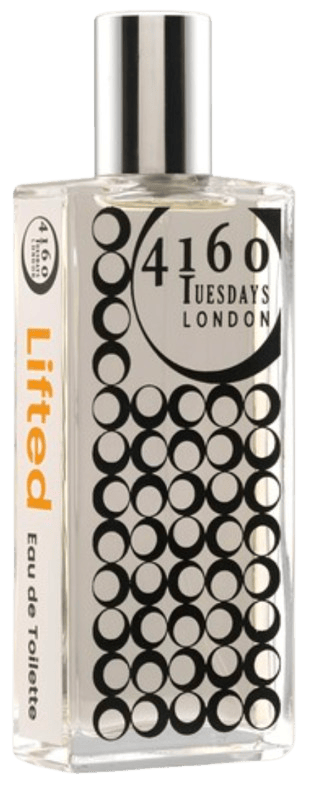 | Lifted — Morning UpliftDesigned initially for a charity fundraiser, Lifted is a tonic for days when optimism feels far away. It greets the wearer with bright bergamot and elderflower, a sparkling yet soft pairing. The heart is a generous bouquet of linden blossom and jasmine laced with a whisper of allspice. Amber woods, musk and vanilla provide a smooth base that hums in the background. The overall effect recalls breathing in the aroma of lime blossom tea: calm and quietly energising. 4160 Tuesdays’ founder, Sarah McCartney, keeps the mood uplifting without veering into saccharine territory. Perfumer: Sarah McCartney |
A brief disclosure.
Scently Speaking runs without ads and without paid placements.
It exists because New Niche exists.
New Niche is the fragrance publishing house we’re building in parallel.
Obtaining one of its perfumes is not merchandise.
It’s how this work stays independent.
Quiz 🎲
Which fragrant flower is traditionally worn behind the left ear when someone is taken and behind the right ear when they are open to romance? |
Scent MythBusters 🎭️
Only the big aroma houses feed the scent world
It is often claimed that only large aroma‑chemical manufacturers such as Givaudan, IFF, Firmenich and Symrise can supply the perfume world. According to this view, the research budgets, compliance staff and distribution networks needed to produce safe, IFRA‑compliant materials are so costly that small producers have no role.

Small scale aroma producers
TL;DR
This claim is partly false. While a handful of multinationals dominate the volume market and their laboratories create many of the notes used in both designer and niche perfumery, there is a vibrant ecosystem of small and medium‑sized suppliers. These artisans contribute distinctive materials and often collaborate with larger partners for certification and scale.
Misconception
The myth rests on the assumption that compliance costs, IFRA restrictions and global logistics are barriers too high for anyone but multinationals. It conflates two separate questions: who can produce a synthetic musk at industrial scale, and who can distil a botanical oil of exceptional quality? It also ignores the role of co‑operatives and networks that pool resources to meet regulatory standards.
Contextual reality
Major conglomerates do indeed control much of the supply chain. When luxury houses launched exclusive “niche” collections in the 2000s, they often used the same industrial suppliers as their mainstream lines. These companies have the capital to invest in new molecules and to navigate IFRA’s evolving rules. Yet this concentration has sparked a counter‑movement: independent distillers and farmers are organising themselves to keep heritage materials alive. They may not register on market‑share charts, but they widen the palette for perfumers seeking authenticity.
Examples
In Bulgaria’s Rose Valley, a modern distillery partners with numerous individual pickers and small‑scale distillers. The larger facility obtains organic certification and handles exports, while artisans contribute hand‑picked roses and wild plants. Some of the oils used by Wild As The Wind come from hand‑selected producers in Thailand and Peru. These arrangements prove that small producers can thrive when they share infrastructure. Meanwhile, consultants such as Alpha Aromatics advise perfume houses to diversify their supplier base and build relationships with local growers, underscoring that resilience comes from plurality, not monopoly.
Final judgement
Large aroma companies are indispensable for high‑volume and highly regulated ingredients, but they are not the only source of quality materials. The perfume world relies on a tapestry of actors: global chemical firms, regional co‑operatives, small distilleries and experimental labs. If we ignore the latter, we risk losing the very character that niche perfumery claims to celebrate. Consumers and brands alike can support this diversity by asking about provenance and by valuing materials whose stories extend beyond the factory gate.
How did you like today's issue?Your feedback drives us & helps us improve 💌 |