- Scently Speaking
- Posts
- Are Some Fragrances Dupe-Proof?
Are Some Fragrances Dupe-Proof?

Sebastian Graf
April 23, 2026
Hello, Fragrant Friend 👋,
I’m writing this in the middle of everything, only now realising what has actually happened over the past weeks. I met Christophe Laudamiel, we launched Before the World Moved Again, Chester presented it at Paris Perfume Week, and the first orders are coming in from across Europe. Some dream partners (🇳🇱, 🇧🇪, 🇮🇹, 🇩🇪) now have it in store, alongside the first genuinely moving reviews on Parfumo and Fragrantica.
At the same time, there have been a few painful lessons. Damaged packaging, DHL frustrations, and the quiet tension between creative freedom, expensive formulas, and building this as an industry rebel.
I’ll share more reflections on this this Sunday at www.scentlyspeakinglab.com
Now onto this issue!
🗓️ Contents of this Issue
Note Worthy: Placebo, CuriosityOverLoyalty, Akigalawood
Niche Newcomers: Spicy Road, Agapimu, Lovers and Strangers
Quiz: How long are captive molecules generally protected?
Scent MythBusters: The complexity of naturals versus synthetics and why some perfumes are clone‑proof
Note-Worthy 🔎🌸
#PLACEBO: Kolido’s Placebo is less a perfume than a controlled experiment. Developed with Nose Magazine, the same formula was presented alongside different visual cues to test how perception alters smell. Participants described completely different scents depending on what they saw. The takeaway is uncomfortable: fragrance is not just chemistry, it is context. What we smell is heavily constructed by expectation, not only by molecules.
#CURIOSITYOVERLOYALTY: Snif is building a brand on the idea that loyalty is fading and curiosity is taking over. Instead of signature scents, consumers are rotating through “experiences” driven by sampling, social discovery and low commitment formats. Their success with unconventional launches, including gourmand concepts that feel almost absurd, shows that novelty now outperforms consistency. Fragrance is shifting from identity marker to something closer to content, constantly refreshed, rarely fixed.
#AKIGALAWOOD: Akigalawood is a case study in how modern perfumery creates value. Developed by Givaudan through biotechnology from patchouli, it delivers a spicy woody profile with exceptional diffusion and longevity. More importantly, it is a captive molecule, meaning competitors cannot legally use it for years. This creates a new kind of differentiation: not storytelling, but controlled access to smell itself. Innovation in perfumery is increasingly happening at molecular level, not just creative level.
Niche Newcomers 🎨 🌟
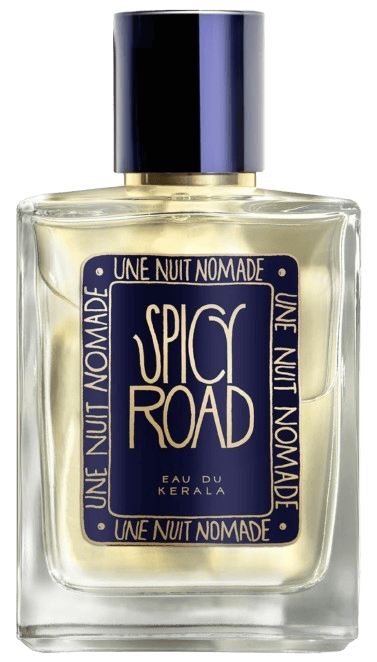 | Spicy Road — Kerala’s Spice Route in a BottleUne Nuit Nomade’s Spicy Road was developed by perfumer Fanny Bal. The fragrance celebrates the spices of western India: pepper sparkles in the opening, vanilla and incense warm the heart, and a woody base anchors the journey. Additional notes of clove, Akigalawood and cedar lend depth. The brand’s description evokes Kerala’s backwaters and pepper vines, making the scent feel like a boat ride through Malabar’s spice markets. |
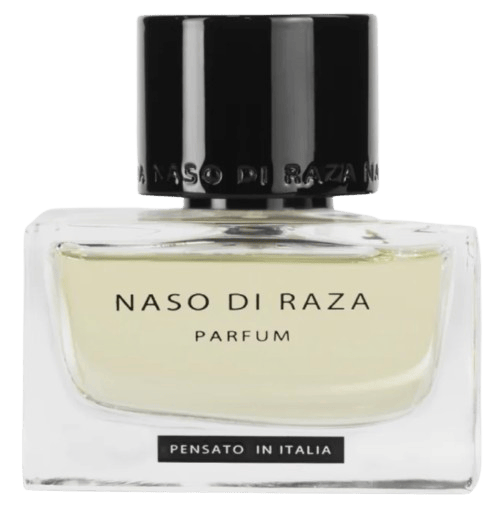 | Agapimu — Resinous RomanceItalian house Naso di Raza enlisted perfumer Patrick Bodifee to compose Agapimu. This 2025 fragrance opens with mandarin, cardamom, pink pepper, cumin, cinnamon and nutmeg. A heart of frankincense, cedarwood, patchouli, oud and cypriol adds smoky warmth, while the base blends rose, caramel, amber, myrrh and white musk. Agapimu layers spice, resin and sweetness into a dusky oriental reminiscent of twilight in a Mediterranean port. |
 | Lovers and Strangers — Boozy SeductionTOBBA’s Lovers and Strangers, composed by Maxime Exler, is billed as “romantic addiction at its most refined.” The extrait opens with rum absolute, prune and tobacco. Rich Colombian coffee Jungle Essence and rose form the heart, with Madagascar vanilla extract, sandalwood and patchouli in the base. The scent unfolds like a noir love story: boozy rum and plums give way to smoky coffee and velvety rose, finishing with creamy vanilla, amber and patchouli. |
A brief disclosure.
Scently Speaking runs without ads and without paid placements.
It exists because New Niche exists.
New Niche is the fragrance publishing house we’re building in parallel.
Obtaining one of its perfumes is not merchandise.
It’s how this work stays independent.
Quiz 🎲
How long are captive molecules generally protected? |
Scent MythBusters 🎭️
Any perfume can be duped, natural or synthetic; it’s just mixing the right ingredients

Same same - but different
TL;DR
Yes, most perfumes can be copied. But only a few can be reproduced.
The more a fragrance relies on linear synthetics, the easier it is to reverse-engineer. The more it leans into naturals, variation and proprietary molecules, the more a dupe becomes an approximation rather than a replica.
Misconception
The popular belief is simple: perfume is just chemistry. Analyse it, list the ingredients, rebuild it. This idea is reinforced by the rise of clone brands that promise “identical” scents at a fraction of the price. If it smells similar in the opening, it must be the same formula.
But that assumption confuses resemblance with replication.
What’s actually happening
Reverse-engineering works best on clarity. If a fragrance is built around a tight structure of well-defined synthetics, it can often be mapped and reconstructed with surprising accuracy. That is why certain modern compositions feel instantly familiar across brands.
But perfumery becomes far less predictable the moment you move away from that clarity.
Natural materials are not single ingredients, they are complex systems. A rose absolute is made up of hundreds of molecules that shift depending on origin, season and extraction. Even if you match the “idea” of the rose, you rarely match its behaviour over time. The fragrance starts to diverge where it matters most, on skin, in the drydown, in the hours no one talks about.
Then there is everything that sits outside a clean analytical read. Ageing, maceration, the use of fixatives that shape evaporation rather than announce themselves. These elements do not show up as clear signals, yet they define how a perfume breathes. Remove them, and the structure remains, but the experience flattens.
And finally, there are ingredients that are simply out of reach. Captive molecules like Akigalawood are designed to combine performance with complexity, then locked away for years. You can analyse around them, approximate them, even get close. But you cannot access the material itself.
So what you end up with is not a copy, but a translation.
Final judgement
The idea that all perfumes are equally easy to dupe is convenient, but wrong. Synthetics bring precision, but they also make a formula easier to decode. Naturals introduce variation, and proprietary molecules introduce limits. Together, they turn a fragrance into something that resists exact repetition.
A dupe can mirror the outline. But the deeper the composition, the more it reveals the gap.
How did you like today's issue?Your feedback drives us & helps us improve 💌 |